
Epoxy Floor Coatings Explained: Types, Cost and How to Choose
An epoxy floor is built in layers. Each one does a specific job, and most floor failures trace back to a skipped layer.
The layers
- Repair. Fill cracks, spalls and holes so the surface is sound. See R-818 and R-343.
- Primer (when needed). Seals porous, damp or oily concrete so the base coat bonds. P-409 for moisture, P-820 for oil.
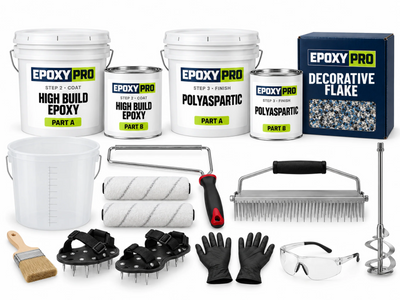
- Base coat. The body of the floor and the color. B-707 High Build Epoxy is 100% solids and builds a thick film in one coat.
- Broadcast (optional). Vinyl flake for texture and to hide imperfections, or metallic pigment for a marbled look.
- Topcoat. Takes the wear and adds UV resistance. T-444X Polyaspartic for most garages.
Choosing a finish
- Full flake: hides imperfections, adds grip, easiest to live with. The most popular garage finish.
- Solid color: clean showroom look. Shows dust and scratches more than flake.
- Metallic: one of a kind, with depth and movement. Best for basements, bars and showrooms.
Prep
Epoxy bonds to open, clean, dry concrete. Diamond grinding is the most reliable way to get there. Coating over dust, sealer, oil or a damp slab is the most common reason floors peel.
Upkeep
Sweep or dust-mop regularly, clean with a pH-neutral cleaner, and wipe up chemicals promptly. M-7962 Polymer Floor Finish keeps the gloss up on high-traffic floors.
Our complete systems include every layer, sized to your floor: Garage Starter, Garage Pro, Garage One-Day, Basement & Indoor Pro or Commercial Pro.
Not sure what your slab needs? Call a coating expert at (877) 703-7699, or build your kit and we will size it for you.
 How Long Does 2-Part Epoxy Take to Dry?
 How Long Do Epoxy Coatings Last?
 What Does 100% Solids Epoxy Mean?